

I have been regularly briefing you on the Employment Rights Act and the phased timetable for implementation. However, there is a more immediate and complex change coming into force in January 2027 that you need to get to grips with now - changes to unfair dismissal. Whilst the headline implementation date is 2027, the real operational deadline is July 2026.
From 1 January 2027, the qualifying period for ordinary unfair dismissal will drop from two years to just six months. That is a fundamental shift.
But here’s the catch:
- Anyone employed by 1 July 2026 will already have six months’ service by the time the new law comes in.
- That means they will automatically gain unfair dismissal protection on 1 January 2027.
From July 2026, any new starters will fall within the new six month qualifying period, meaning your window to assess, manage and, if necessary, exit employees reduces significantly. In practical terms, decisions that were previously low risk and informal will very quickly move into full unfair dismissal territory if they are not handled correctly
Why this matters for electrical contractors
Historically, employers have had breathing space, up to two years to assess performance and fit. That disappears.
From 2027, you will need a fair reason AND a fair process after just six months. Early-stage dismissals will face far greater scrutiny and for an industry reliant on project-based recruitment, fast mobilisation and tight margins, this is a material commercial risk, not just HR compliance.
Probation periods: now your only practical protection
Probation doesn’t change in law, but its importance does. You now have a much shorter window to assess and act.
If you haven’t made a clear, evidence-based decision before month six (including notice period), you are into full unfair dismissal territory.
Recommended approach
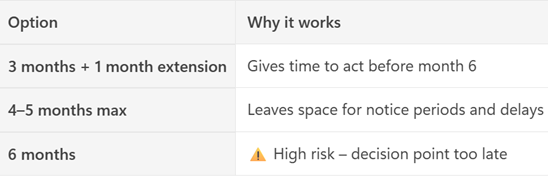
What a defensible probation process looks like
- Day 1: Set expectations — clear role, objectives, and training plan.
- Structured reviews — minimum at four weeks, 8–10 weeks, and pre-end review.
- Early intervention — address concerns promptly with documented actions.
- Formal outcome — pass, extend or fail with written rationale.
- Act in time — ensure decisions are made before six months including notice.
What employers should do now
- Review probation lengths
- Introduce structured review processes
- Train managers on documentation and decision-making
- Ensure clear objectives for all new starters
Bottom line
This is the biggest shift in early employment risk in a decade. The two-year safety net is gone, and the six-month clock is non-negotiable.
Well-run probation is no longer good practice; it is your primary defence against unfair dismissal claims.
Further support and advice
All ECA Members have access to support from ECA’s Employee Relations team, including a dedicated Employment Law webpage, guidance notes and other support materials, as well as the helpline.
There is a Growth Hub course on Future-Proofing Your Business for New Employment Laws, taking place on 16 June and 14 July, with more dates to follow later in the year. Don’t forget you have funding allocated to you every year that will either subsidise or cover the cost of courses available.